
3 minute read · KANTE guide
One planter can give a doorway a focal point; a pair can frame it. Start with the space that remains when the doors are open and the usual route is in use, then choose the arrangement that feels balanced within that space.
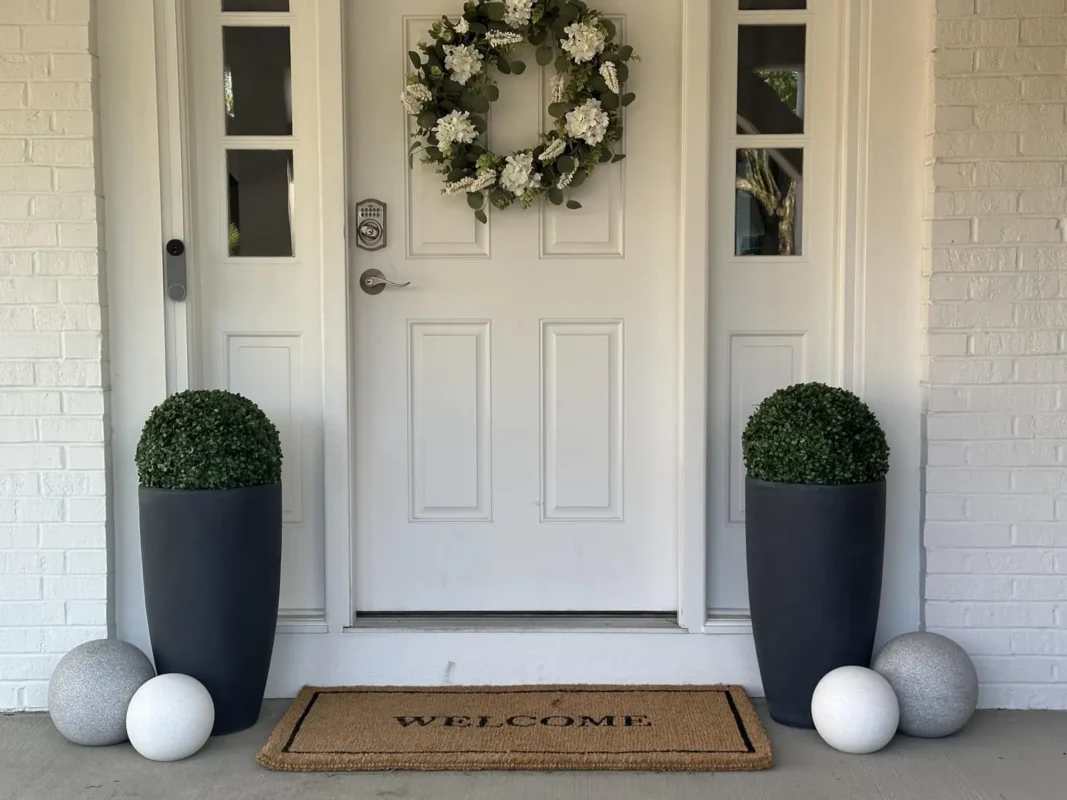
Two planters frame a front door; check the door swing and walking route before choosing a pair.
Check the door and walking route first
Start with the porch in use, not just viewed from the sidewalk. Open the main door and any screen or storm door. Walk through carrying the items you normally bring home. Check the approach from the driveway, sidewalk, and steps, including the turn at the door.
Keep planters and foliage clear of door swings, handrails, house numbers, doorbells, and lighting. Allow room for deliveries without making the delivery area part of the route people need to use. Follow any applicable building or access requirements for your property; a decorative layout is not an accessibility assessment.
When one planter makes sense
A single planter often works well beside an offset door, on a compact landing, or at an entrance where one side has more usable space. Place it where it creates a focal point without making people step around it.
Use the container’s scale and the plant’s outline to give the arrangement presence. A larger pot is not automatically better, and a tall pot still needs its full width checked. Our planter measuring guide explains which dimensions to compare.
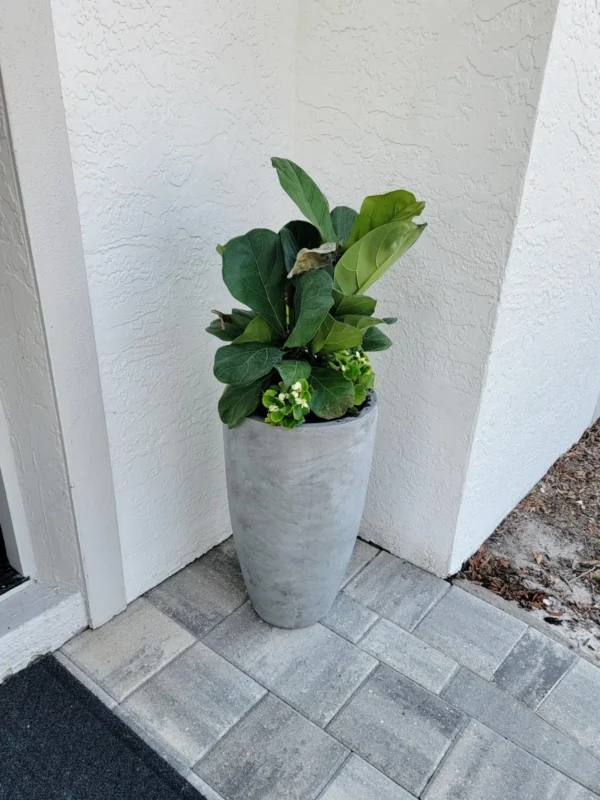
One tall planter gives an offset entrance a clear focal point.
When to use a balanced pair
A pair of similarly sized planters can frame a door if both sides have enough usable space. Mark both footprints and test the door and approach before buying. Even a centered doorway may have unequal clearance on either side.
The pots can match while the planting stays simple. Repeating a plant form or a similar overall height can create balance without adding several different decorative elements. Choose plants for the actual light, climate, and root space at your entrance.
Check whether the listing includes one pot or two
Styled photos may show several containers together. Check the contents of the exact listing rather than counting pots in a scene.
- The 24-inch white concrete planter is listed as one planter. A matching pair requires two planters.
- The 13-inch black plastic planter set is listed as a set of two, with removable inner pots.
Plants and decorative accessories shown in a scene are not included unless the listing expressly says otherwise. Check the selected size and color before following a retailer link.
Try the arrangement before planting
- Outline the containers. Use their widest outside dimensions, not just the base. Keep temporary markers suitable for the porch surface.
- Test everyday movement. Open the door, use the steps and handrail, and walk the normal approach from both directions.
- Include the foliage. Imagine its expected width and height, rather than planning around only a young plant.
- Check the care route. Make sure you can water, inspect drainage, and empty any suitable tray without blocking the entrance.
- Choose the final position. Plan before filling a large or heavy planter; follow its handling instructions.
A few common questions
Does a welcoming entry need matching planters?
No. A single planter can be a complete arrangement. If the entrance is asymmetrical, work with the available space rather than forcing a pair into it. Keep the walking route clear and let the surrounding architecture guide the position.
Choose the arrangement that works with your doorway. One well-placed planter can feel complete; a pair earns its place when both sides have the space and the walking route remains clear.
Continue reading
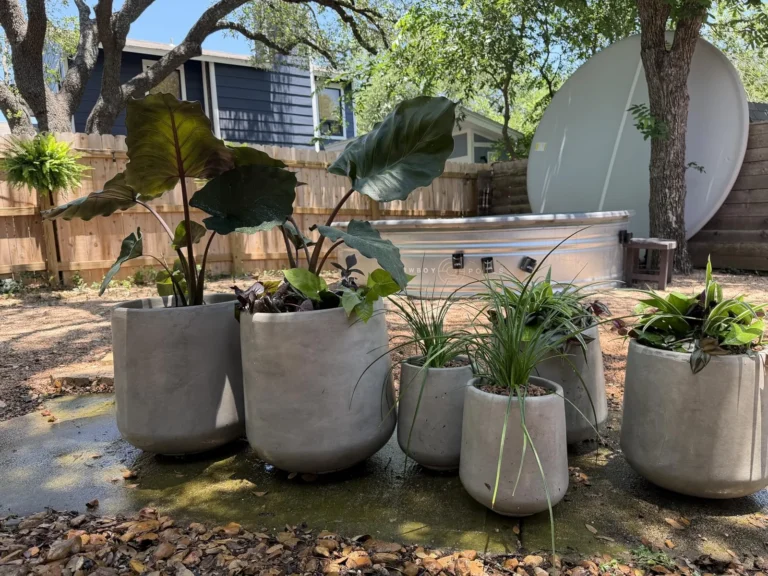
Planter Styling Ideas for Porches, Patios & Indoors
Plan balanced arrangements for porches, patios and indoor corners using scale, repeated forms and space to move, with real settings to guide your choices.