
4 minute read · KANTE guide
A planter arrangement feels considered when it belongs to the space around it. Start with a clear route, choose one feature to repeat, and let the surrounding furniture, architecture and plants provide the variation.
These real settings offer different ways to work with a doorway, patio corner or indoor focal point. Use each scene to understand the arrangement, then check the dimensions and details of the planter you choose.
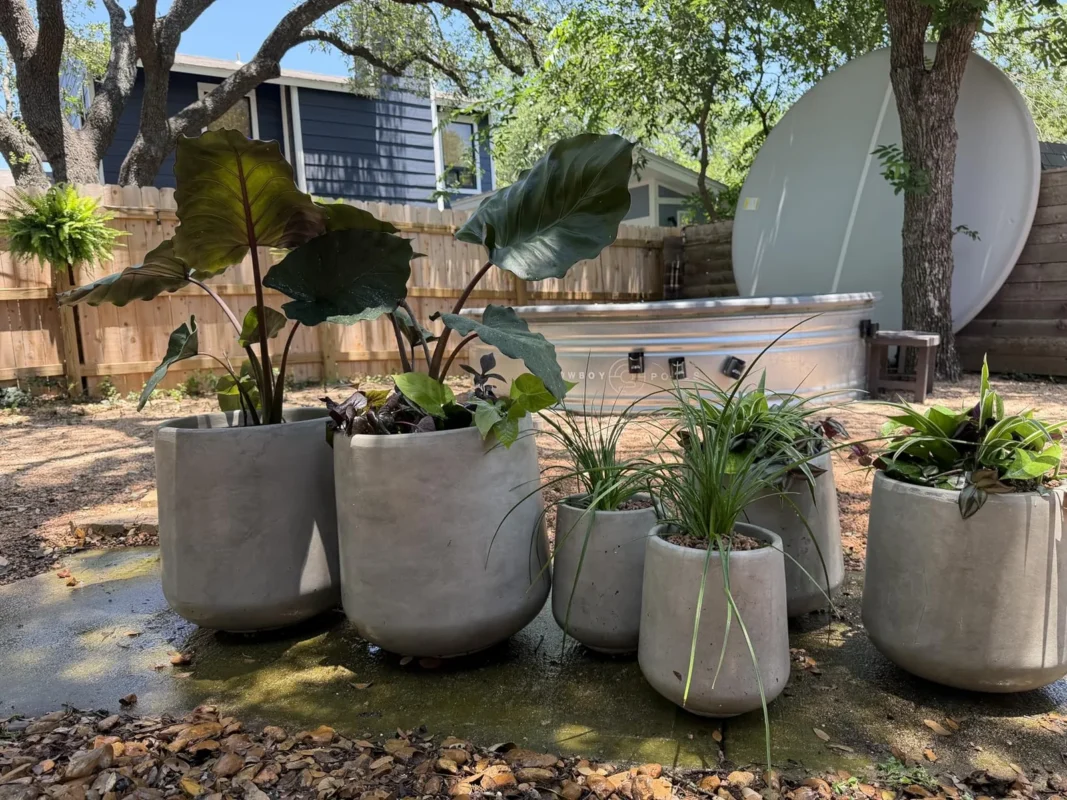
Rounded planters bring different leaf shapes and heights together on a shaded patio.
1. Choose the planter’s role in the space
Give the planter one clear job: frame an entrance, connect a patio grouping or create a vertical accent beside furniture. Look at the position from the route people use and, where relevant, from a seated viewpoint.
Mark the outside footprint, open the doors and pull out nearby chairs. Leave room for the plant’s spread and for watering and drainage checks. The measuring guide helps turn a visual idea into a practical layout.
2. Frame a porch or entry without blocking it
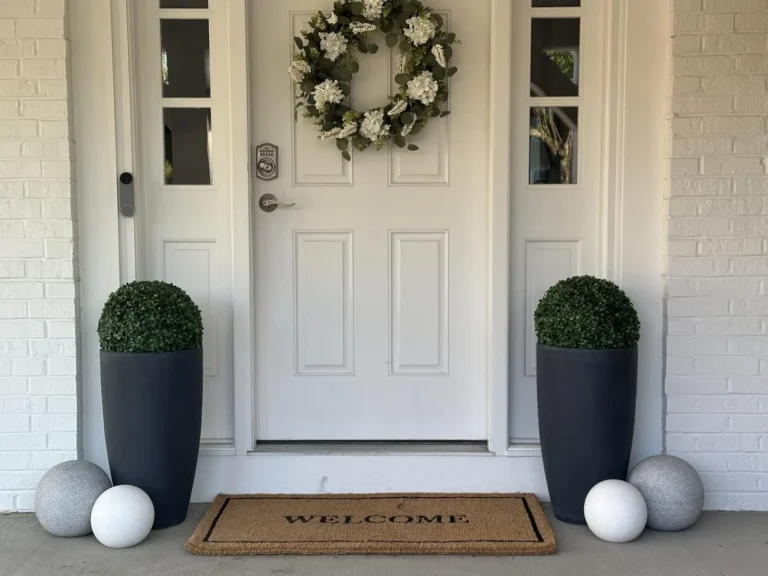
Read the entrance as a whole: the width of the door, the available landing and the visual weight of nearby planting or furniture. A pair can frame the doorway, while an uneven group can balance an entrance with different amounts of space on each side.
In this setting, the dark door and containers connect the group, while the white flowers and fern-like foliage provide contrast. Repeat a finish or a plant outline rather than adding every decorative idea at once. Mark the planter footprints and test the door swing before deciding how many pieces to use.
For the choice between one pot and two, continue with front porch planter placement.
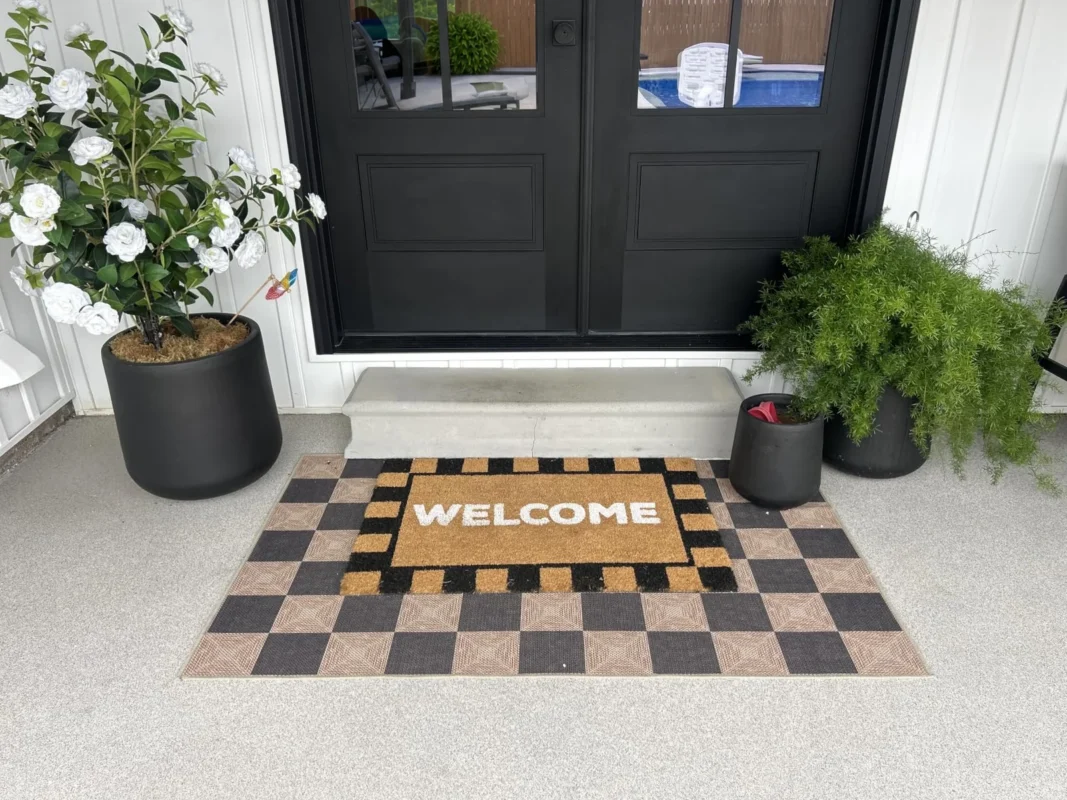
Deep-colored planters and contrasting foliage give a double-door entrance an uneven but connected balance.
3. Vary the height, repeat the form
Different sizes can make a group feel varied even when the planter shape stays consistent. The three pale containers in this patio scene share a rounded outline; the taller plant and lower flowering forms give each one a different role.
Leave enough space between the pieces to read their outlines, and check the arrangement with nearby chairs in use. Use the largest container as an anchor, then add a smaller piece only where it improves the composition and remains easy to reach for care.
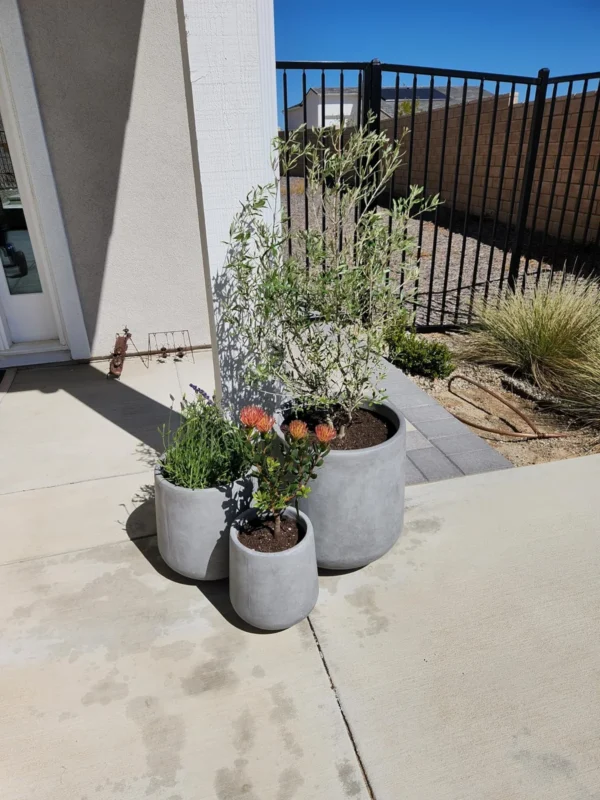
Three rounded planters vary in scale while repeating the same pale finish.
4. Balance concrete with indoor materials
Indoors, a floor planter can connect the height of a tree-shaped plant with the lower line of a console, sofa or cabinet. In this entry setting, the planter forms a quiet vertical accent beside the console and round mirror.
Keep one element consistent—perhaps the planter finish—while allowing wood, fabric and foliage to create contrast. The planting may be live or decorative; choose any live plant for the actual light and care conditions, and plan surface protection before watering.
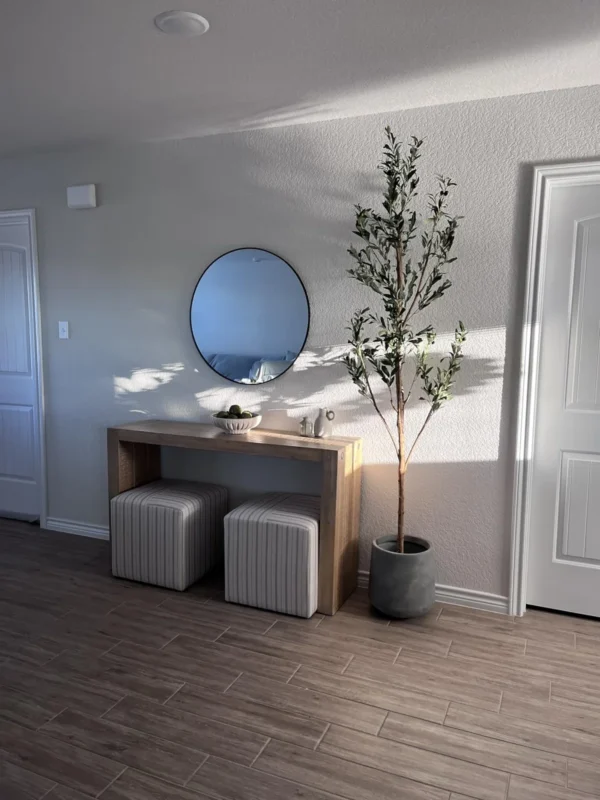
A floor planter adds a vertical accent beside an entry console.
5. Group planters by shape or color
Choose one feature to repeat: the planter’s outline, its finish or a similar planting palette. That gives the group a common thread while allowing height, leaf shape and surrounding materials to vary.
A matching appearance does not prove matching construction or included parts. Check each product’s material and quantity when combining models. A scene may contain planters bought separately, together with plants and accessories that are not supplied with them.
6. Turn the arrangement into a short checklist
Write down the planned position, model, finish, number of planters and outside dimensions. Add how each piece will be watered, drained and moved. This keeps the arrangement practical as well as visually balanced.
The related KANTE forms alongside this article provide a route from the idea to actual product details. Their listed finish, dimensions and included quantity should guide the purchase; the scene photographs show the arrangement.
A few common questions
Should planters beside a front door match?
Matching is a styling choice, not a requirement. Repeating a finish or form can connect an arrangement. Measure both positions and check each product's dimensions and included quantity before planning a pair.
Can I use an outdoor planter in an indoor arrangement?
Check the intended use and instructions for the particular product. Plan moisture protection and collected-water management indoors. A planter's appearance or a rubber plug should not be treated as a guarantee that a floor or furniture surface will stay dry.
Are the plants and accessories in inspiration images included?
Do not assume they are. Use each product's included-items details. The product pages identify the planter quantity and supplied parts; social and scene images are used to share styling ideas.
How do I identify a planter shown in a social post?
Compare the model, material, finish, measurements and included quantity with the actual product page. If the post does not identify a model or you cannot confirm a match, send its link to KANTE Support before ordering.
The most convincing arrangement belongs to its setting. Repeat one feature, leave room for everyday use, and let the plants and surrounding materials give the group its character.
Continue reading
Front Porch Planter Placement: One Pot or a Pair?
Decide whether one planter or a pair suits your entrance, then check door swing, steps and the everyday walking route before choosing the arrangement.